
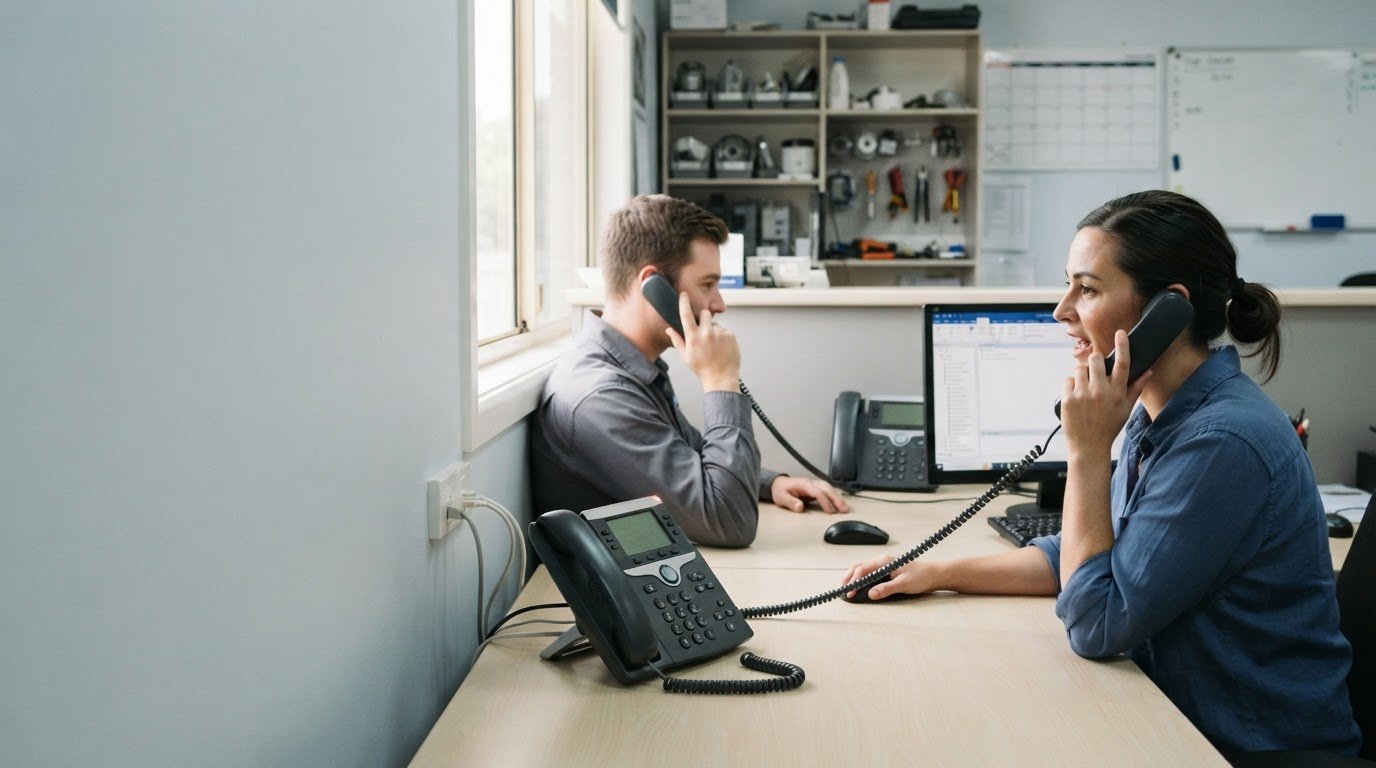
Missed calls often point to a gap in how enquiries are handled, not a lack of demand. A system designed to help Sydney businesses manage unanswered calls can answer callers, capture what they need and direct them to a callback, booking, message or staff member. Ask whether an AI answering system can manage 12 simultaneous calls, as capacity varies by system.
When your team is helping customers, working on jobs or handling other calls, a new enquiry can go unanswered. That caller may move on before your business has a chance to understand what they need or follow up.
This article explains why small businesses miss calls and how unanswered enquiries can affect sales. It also explores how AI answering can capture a caller’s reason for calling and guide them to a next step, including when several calls come in at once. You’ll learn how this differs from voicemail and call forwarding, and how a business phone system can support a more consistent call-handling process.
Key Takeaways
- Look for the specific gaps behind unanswered calls, such as staff availability or call-handling arrangements, before deciding what to change.
- Make missed enquiries visible to your team so callers can receive a timely, useful follow-up.
- Choose a call-handling approach based on whether callers need a message option, redirection or a more interactive response.
- Consider how a business phone system could support a clearer call-handling process as your team’s needs change.
Handling multiple calls at the same time
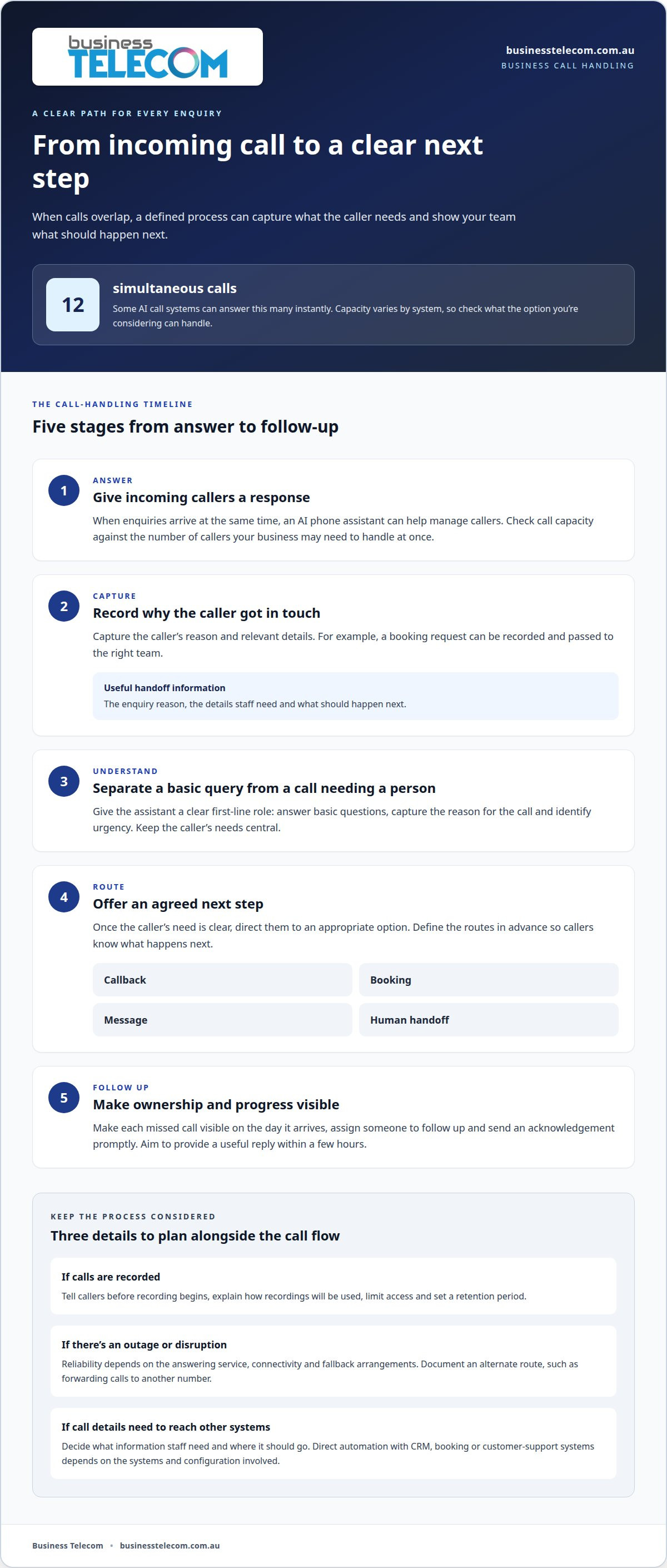
When enquiries overlap, an AI phone assistant can help manage callers and capture what they need. Some AI call systems can answer 12 simultaneous calls instantly.
Enquiry Handling Processes
An enquiry process records why a caller got in touch and what should happen next. For example, an assistant can capture the details of a booking request and pass them to the right team. This creates a consistent handoff when several calls arrive at once.
For privacy-conscious call recording, tell callers before recording begins and explain how recordings will be used. Limit access and set a retention period, rather than treating recordings as unrestricted notes.
Calls to an existing Sydney number can be routed into an answering arrangement when the number’s hosting supports that configuration.
To connect call details with CRM, booking or customer-support workflows, decide what information staff need and where it should go. Direct automation depends on the systems and configuration involved, with solutions like Lead Lock Tek providing automated tools designed to keep schedules full and operations running smoothly around the clock.
Call Answering Options Compared
An AI assistant can capture a caller’s intent and guide them to an agreed next step. A live receptionist offers a person to speak with; voicemail records a message, while call forwarding redirects the call elsewhere. Each option suits different needs, so match the route to the enquiry and the staff response available.
Reliability during outages or emergencies depends on the answering service, connectivity and fallback arrangements. Document an alternate route, such as forwarding calls to another number, so staff have a contingency during disruption. During peak periods, call capacity also determines how many callers the system can handle at once.
Give the assistant a clear first-line role: answer basic questions, capture the reason for a call and identify urgency. This helps distinguish a straightforward query from one that needs a person, while keeping the caller’s needs central. Once the need is clear, offer an appropriate next step, such as a callback, booking, message or human handoff. Defining these routes keeps the assistant focused and makes the next step clear to callers.
How missed calls can lead to lost business
An unanswered call can prompt a prospective customer to contact another business. A timely response and clear follow-up process help keep enquiries moving.
Missed-Call Visibility and Follow-Up
Missed-call visibility lets staff see unanswered calls and track what happens next. Without it, a call can easily be overlooked during a busy day. Make each missed call visible on the day it arrives, assign someone to follow up, and send an acknowledgement promptly. Aim to provide a useful reply within a few hours.
For example, a Sydney service business can record each caller’s number, enquiry reason and next action in one shared process. This makes recurring gaps easier to spot, such as calls missed while staff travel between jobs.
Business Impact of Missed Calls
A Sydney electrical business with 12 vans was losing about a third of its calls to ring-outs. The example shows how field work can leave incoming calls unanswered, even when a business is active and serving customers.
Some businesses leave enquiries unanswered for a day or two. A short acknowledgement followed by a useful reply within a few hours gives the caller a clear next step and helps staff distinguish urgent work from routine questions.
When assessing a call-answering agreement, review its response times, service coverage, outage escalation and exclusions. Check the cancellation notice, exit costs and arrangements for keeping or transferring your number. Clear terms show what support applies during peak periods and disruptions.
Common reasons small businesses miss calls
Small businesses often miss calls because of one or two specific coverage gaps. Finding the pattern is more useful than blaming staff for every unanswered ring.
During a customer appointment, reception may be occupied and unable to answer. In a trade business, staff may be at a job site with no colleague free to take incoming calls. These are coverage gaps, not necessarily a lack of interest in responding.
Calls outside 9-5 can also reach a business when the usual team is unavailable. A Sydney business that closes its office may still receive an enquiry from someone arranging work after hours. If callers have no clear way to leave a message or request follow-up, the enquiry can remain unattended until staff return.
Another gap arises when one employee handles several tasks at once. A receptionist may be helping a walk-in customer as the phone rings, or a manager may be speaking with a supplier when a new customer calls. Call forwarding can also fall short if calls go to someone who is busy or away from their desk.
Unclear responsibility makes the problem harder to spot. If staff assume someone else will return a missed call, nobody may take ownership. For example, a voicemail on a shared handset can go unheard if the team hasn’t agreed who checks it and assigns the next action.
Review the call log for patterns in the time, destination and outcome of unanswered calls. Calls that cluster around opening, lunch breaks, appointments or staff travel point to a specific coverage issue. This simple review can reveal whether the gap involves staffing, routing, after-hours handling or unclear follow-up. Addressing the cause gives your team a practical basis for improving call coverage.
How do AI answering systems, live receptionists, voicemail, and call forwarding compare?
These options vary in consistency, personal interaction and how much follow-up responsibility stays with your staff. The right mix depends on the enquiries your business receives and what callers need from the first interaction.
An AI answering system can follow the same configured process on every call, supporting consistent handling of routine enquiries. An unusual request may not fit the prepared conversation, so decide how callers can reach a person when an enquiry requires judgement or more context.
A live receptionist provides human interaction and can respond to a caller’s tone or an unexpected explanation. This can suit enquiries where a personal conversation matters. Coverage depends on the receptionist’s scheduled availability, so consider what callers experience outside those periods.
Voicemail lets callers leave details without speaking to someone immediately, but the message may not include everything staff need, requiring another call. Forwarding can spare callers from repeating their enquiry if a staff member answers, but it depends on that person being available and able to take the call.
Compare options by considering caller expectations, enquiry complexity, staffing patterns and the follow-up each approach creates. A business handling routine booking enquiries may value predictable call handling, while a team managing sensitive or complex requests may prefer access to a person. A combined arrangement offers different paths, but someone still needs to own exceptions and follow-up.
If you’re reviewing how your team handles incoming calls, discuss your call-handling requirements and consider which approach fits your callers and staff.
Business Telecom: Business Phone System
Business Telecom’s Business Phone System can help Sydney teams review how they manage calls. It is an option to consider when staff availability, call routing or outdated equipment makes enquiries harder to handle.
For a small team, the right setup depends on how calls should reach staff and what callers need when nobody is available. Business Telecom also provides Business Land Lines, Office Phone Systems and small business phone systems, with options to suit changing communication needs.
If you’re considering a change, contact Business Telecom to discuss your Sydney business phone system requirements.
Build a call-handling plan your team can use
Before changing your setup, map what should happen from the moment a caller reaches your business. Decide which enquiries need a person, which can follow a standard response, and who owns follow-up when a call needs attention. This gives your team a practical way to assess whether a call-handling system designed to help reduce unanswered calls in Sydney fits its working day.
Consider how the approach fits staff routines, customer expectations and future changes. A system should make the next action clear, not add another disconnected task to a busy day. The right configuration depends on how your team handles calls and the outcomes you need from each interaction.
To discuss a phone system for your Sydney business, contact Business Telecom. A clear plan is a useful starting point for more consistent customer conversations.
Frequently Asked Questions
What does a call-handling system designed to help manage unanswered calls include for Sydney businesses?
A call-handling system designed to help manage unanswered calls in Sydney can combine an incoming call path, routing rules and a fallback for unanswered calls. Depending on the setup, this may use extensions, voicemail, call forwarding or an answering service. For example, callers could hear opening hours, select a department and leave a message when staff are unavailable. Clear instructions and assigned follow-up help keep enquiries moving.
Which Sydney providers offer 24/7 business call answering or virtual receptionist services?
Business Telecom provides business phone systems, business land lines and office phone systems for Sydney businesses. These systems are distinct from a staffed virtual receptionist service and do not, by themselves, mean a person answers calls around the clock. AI answering and live receptionist arrangements are separate options. Identify whether your priority is call routing, automated responses or a person speaking with callers.
What steps are involved in setting up after-hours call answering and call routing?
Set up after-hours answering by agreeing on the caller’s route and the team’s follow-up process:
- Set the hours when the usual team is unavailable.
- Choose what callers hear, such as an after-hours message or menu.
- Set the destination for calls, such as voicemail or an on-call number.
- Assign who reviews messages and responds when the business reopens.
Test the route using an outside phone to confirm that each option works as intended.