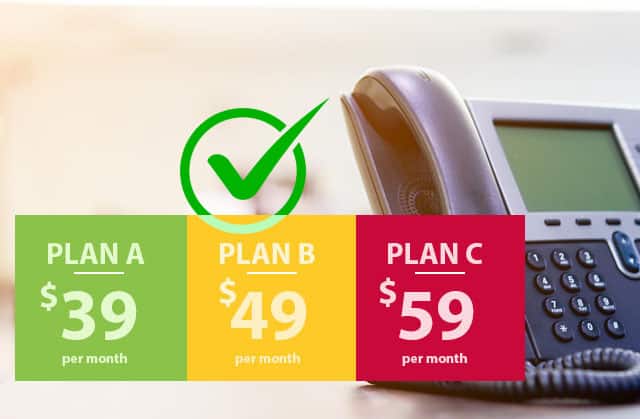
After-hours call forwarding in Brisbane may be included in a cloud phone plan, while other setups may involve extra charges. The cost depends on the plan and call-routing arrangement, so there is no single fee for every business. Choose an approach that suits callers’ needs and the staff available to respond.
Your arrangement should also work with the way your business uses its current number. Some teams need a simple way to direct calls outside opening hours; others need separate routes for urgent requests, routine enquiries and times when nobody is available. Make the caller’s next step clear, and keep the process manageable for staff.
This guide explains what can affect routing costs, how urgent calls can reach the right staff member and what setup may involve. It also covers number compatibility and how your existing landline or a broader business phone system could meet your needs. Use it to plan after-hours call handling for your Brisbane business.
Key Takeaways
- After-hours routing may be included in a cloud phone plan or attract additional charges, depending on the plan and call handling.
- Set separate call rules for weekdays, weekends and public holidays so callers receive the right response when your business is closed.
- Route urgent calls to a designated staff member or mobile, with a fallback path if they can’t answer.
- Setup and number compatibility depend on how your current phone service connects to the system and the routing you need.
Business-hours schedules and after-hours call routing
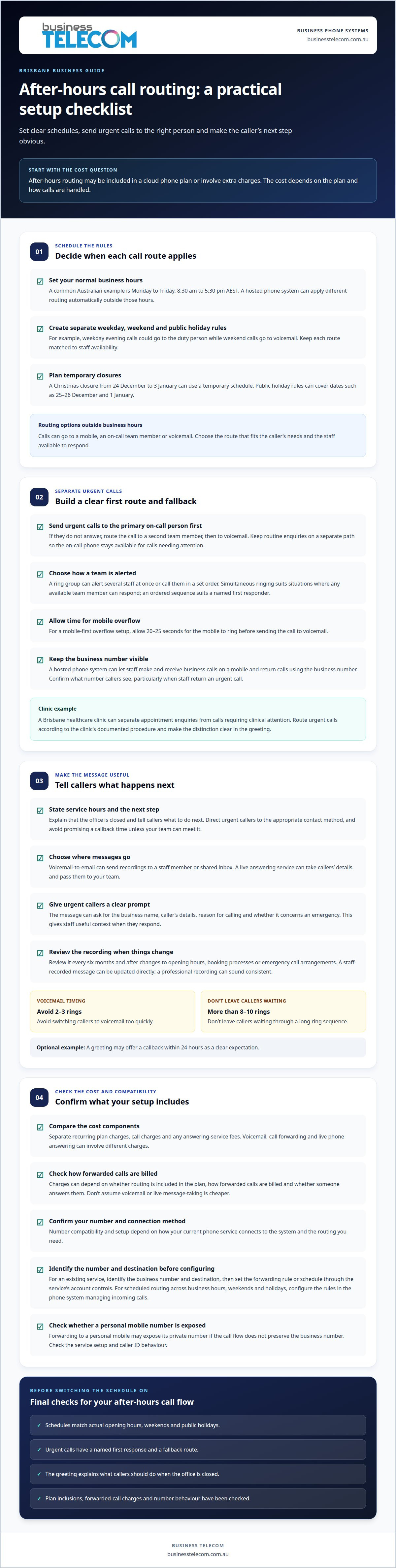
Set a business-hours schedule so incoming calls follow different routes when your Brisbane office closes. A common Australian example runs Monday to Friday, 8:30am to 5:30pm AEST. Outside those hours, calls can go to a mobile, an on-call team member or voicemail. A hosted phone system can apply these rules automatically.
Build separate rules for weekdays, weekends and public holidays. For example, an office might forward weekday evening calls to its duty person, then send weekend calls to voicemail. A Christmas closure from 24 December to 3 January can use a temporary schedule. Public holiday rules can cover dates such as 25-26 December and 1 January.
Which Brisbane phone providers offer after-hours call forwarding? Businesses can use an existing phone service that supports timed forwarding, or a hosted phone system with scheduled routing. Telstra and Optus are examples of Australian services, but the available forwarding options depend on the service and account.
How do I configure after-hours call forwarding on Telstra, Optus or other Australian services? Start by identifying the business number and destination, then set the forwarding rule or schedule through the service’s account controls. For scheduled routing across business hours, weekends and holidays, configure the rules in the phone system that manages incoming calls.
Calls can still be missed if nobody answers the destination phone. Set voicemail as a fallback and choose a suitable ring duration so callers are not switched too quickly. The voicemail greeting should explain that the office is closed and tell callers what to do next. Forwarding to a personal mobile may expose its private number if the call flow does not preserve the business number. Check how your service plan bills forwarded calls.
Routing costs and professional message recording
After-hours costs depend on the routing method, service plan and how calls are handled. Voicemail, call forwarding and a live phone answering service can each involve different charges.
Setting Up Call Answering
Decide where messages should go before setting up the call flow. Voicemail-to-email can send recordings to a staff member or shared inbox, while a live answering service can take callers’ details and pass them to your team. For teams exploring automated 24/7 call handling, AI receptionist platforms like oscarpicksup.com can answer incoming calls and capture enquiries without requiring rostered staff.
For urgent calls, route callers to the on-call person first, then to voicemail if they do not answer. The message should include the business name, caller’s details, reason for calling and whether it concerns an emergency. This gives staff useful context to respond without relying on incomplete notes.
Service Hours and Recorded Messages
State the service hours clearly in the recorded greeting, including what callers should do outside those hours. For example, explain that the office is closed and direct urgent callers to the appropriate contact method. Avoid promising a callback time unless your team can meet it.
A message may offer a callback within 24 hours as a clear expectation. Review it every six months and after changes to opening hours, booking processes or emergency call arrangements. A professional recording can sound consistent, while a staff-recorded message can be updated directly when details change.
Forwarding and answering charges can depend on whether the plan includes routing, how forwarded calls are billed and whether someone answers them. Separate the cost components: recurring plan charges, call charges and any answering-service fees. This makes it easier to compare voicemail with live message-taking without assuming either option is cheaper.
Set a sensible voicemail timeout. Avoid switching callers to voicemail after just 2-3 rings, but don’t leave them waiting through more than 8-10 rings. A clear greeting and prompt message delivery can help staff prioritise bookings, sales enquiries and emergency calls when business resumes.
Forwarding urgent calls to staff or mobile phones
Give urgent calls a different route from general enquiries. For example, after-hours support calls can go to the primary on-call person first, then to a second team member if unanswered. Routine sales enquiries can go to voicemail, keeping the on-call phone free for calls that need attention.
A ring group can alert several staff members at once or call them in a set order. Use simultaneous ringing when any available team member can respond; choose an ordered sequence when one person is responsible for the first response. Clear rules tell staff who takes over if that person is unavailable.
For a mobile-first overflow setup, allow 20-25 seconds for the mobile to ring before sending the call to voicemail. This gives the staff member time to answer without leaving callers waiting through a long sequence. Forwarded calls may incur charges under the relevant service plan, so include destination and call handling in cost calculations.
With a hosted phone system, staff can make and receive business calls on a mobile and return calls using the business number. This prevents a personal mobile number from becoming the main customer contact. Confirm that the call flow displays the business number, particularly when staff return an urgent call.
For a Brisbane medical or healthcare clinic, separate appointment enquiries from calls requiring clinical attention. Route urgent calls according to the clinic’s documented procedure, and direct routine booking requests to voicemail or an appropriate team member. Make the distinction clear in the recorded greeting so callers know what to do.
Routing can reduce time spent transferring calls between staff and sorting general messages from urgent requests. A call queue can hold callers, play an announcement and distribute calls as team members become available. This can help a busy team manage incoming calls, but it cannot replace having enough staff to answer them.
Set a fallback for every mobile destination: another staff member, voicemail or a message inbox. Test the sequence by calling from outside the office. Confirm that the right person receives the call and can respond using the business number.
Service setup and phone number compatibility
Setup depends on where your Brisbane business number is managed and where calls need to go. Basic after-hours routing can typically be configured in about 10 minutes when it’s included in a cloud phone plan.
Does Australian call forwarding work when forwarding calls interstate or overseas? Forwarding depends on the service’s configuration and the destination number. The destination and call charges affect how an interstate or overseas route works for your business.
First identify whether your existing number connects through a landline service, mobile service or hosted phone system. Then document the incoming number, call destination, fallback and voicemail route. Your current provider and connection determine how forwarding or a number transfer is arranged.
Consistent customer service depends on what callers hear and how they use the system. An auto-attendant can offer options, such as pressing a key for bookings, while voicemail captures details outside staffed hours. Make a test call from an outside phone to confirm the menu works and voicemail reaches the right destination.
After-hours pricing depends on the setup. These are separate service types, not the price of call forwarding.
During activation, confirm the business name, opening hours, public holiday schedule and voicemail destination in the call flow. If your business advertises availability 7 days, the schedule should reflect who answers calls on each day. Keep the routing details aligned with actual staff availability.
For a Brisbane team planning a routing change, discuss your call-routing setup and how the existing number should connect.
Business Telecom
Business Telecom helps Brisbane businesses choose phone setups that support after-hours call handling. Bring your current number, how your team handles incoming calls and any requirements that shape the customer experience to the discussion.
The discussion can focus on how the setup fits your operations, including who manages changes when staff responsibilities shift. Clear ownership keeps call handling aligned with the way your business works.
Contact Business Telecom to discuss your Brisbane business’s phone requirements.
Make your next phone system decision
For after-hours call forwarding in Brisbane, treat the setup as part of your customer-service process, not just a phone setting. Decide who owns the routing plan, how staff changes are recorded and how caller instructions stay aligned with your operations. Clear ownership helps keep the arrangement useful as your business changes.
When reviewing how your phone service supports call handling, outline the customer experience you want your phone system to support and any operational constraints. This gives a discussion about your requirements a practical starting point without committing you to a particular setup.
Contact Business Telecom to discuss routing and take the next step towards a phone system that suits your Brisbane team. A focused discussion can help turn your requirements into a clear plan.
Frequently Asked Questions
Does After-Hours Routing Cost Extra?
It can, depending on the phone plan and how calls are routed. A plan may include scheduled forwarding, while forwarded calls or a live answering service can involve separate charges. For example, routing calls to a staff mobile and paying someone to answer them are different arrangements. Review recurring plan fees and call charges separately to understand the full cost.
What Happens When a Client Calls?
Callers follow the route set for that time and number. They might hear a recorded greeting, choose an option, reach a staff member or leave voicemail. For example, a customer calling about an appointment could hear instructions for leaving their preferred booking time. A clear message should explain what callers can do next, not imply someone is available when they are not.
Which Plans Work Best?
The right plan matches your call volume and the response callers need. A small team receiving occasional after-hours calls may need only forwarding and voicemail. A business that needs someone to answer, take details or direct urgent requests may prefer a live answering arrangement. Compare call destinations, message delivery and included services with your actual operating needs.
How does after-hours call forwarding work for Brisbane businesses?
For Brisbane businesses, after-hours call forwarding uses a rule to send incoming calls to a chosen destination outside scheduled opening hours. That destination could be a staff phone, another team member or voicemail. A business can use different routes for weekdays, weekends and public holidays, allowing its call handling to reflect who is available and what callers need.
How do I set up after-hours call forwarding on a Brisbane business landline?
First identify how the landline service manages forwarding: through the phone, account controls or a connected phone system. Set the after-hours destination and fallback, then make a test call from outside the office. Check that the call reaches the intended person and that unanswered calls follow the right next step.
Can calls be forwarded to a mobile or answering service after hours?
Yes. Depending on the phone setup, forwarding can direct calls to a designated mobile or an answering service. A mobile destination suits a staff member responsible for urgent calls; an answering service can take messages when your team is unavailable. Consider how messages reach your staff and whether your plan charges for forwarded or answered calls.